
A new study has been published in the international journal Applied Thermal Engineering, available online since December 30, 2024. The paper, titled “Design and implementation of industrial hot pipeline prototypes with high vacuum multilayer insulation: Enhancing thermal performance and lifetime”, presents a significant innovation in the field of thermal insulation for industrial energy transport systems.
The research addresses a key challenge in the energy sector: reducing heat loss in pipelines that transport high-temperature fluids (100–250 °C), which are typically insulated with traditional materials like rock wool. These materials are bulky, moisture-sensitive, and offer limited thermal performance.
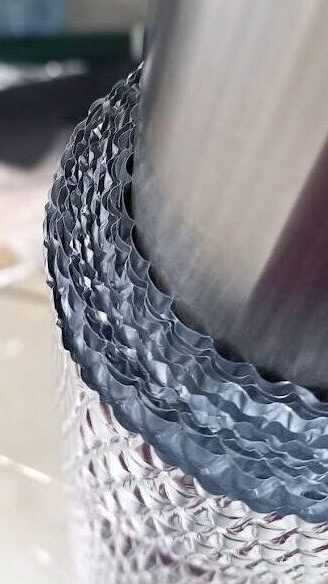
To overcome this, EFESTO researchers designed and built a vacuum-insulated pipe (VIT) prototype using High Vacuum Multilayer Insulation (HVMLI) technology.
The team demonstrated that the prototype::
- Achieved a thermal conductivity of 0.0018 W/m·K at 150 °C, more than 20 times lower than 100 mm thick rock wool;
- Reduced the component’s volume by over 2.5 times, improving both handling and environmental impact;
- Maintained high-vacuum conditions with non-evaporable getter (NEG) systems, ensuring long-term performance stability.
The system remained effective even under thermal cycling, with internal pressure staying below the 10⁻⁵mbar threshold, beyond which gas conduction losses would increase significantly.
The new VIT projects will focus on further reducing the size of the component and reducing the contribution of solid conduction between layers to improve the performance of HVMLI VIT.
For further details, please refer to the full article available in Open Access mode.
📄 Full Reference:
Capolupo F., D’Alessandro C., De Maio D., Di Giamberardino F., Palmieri V.G., Anacreonte A.V., Russo R., Musto M. (2025). Design and implementation of industrial hot pipeline prototypes with high vacuum multilayer insulation: Enhancing thermal performance and lifetime. Applied Thermal Engineering, Vol. 264, 125373.
DOI: 10.1016/j.applthermaleng.2024.125373