Solar Thermal Field

Our activities are dedicated to the development and characterization of devices for renewable solar energy conversion

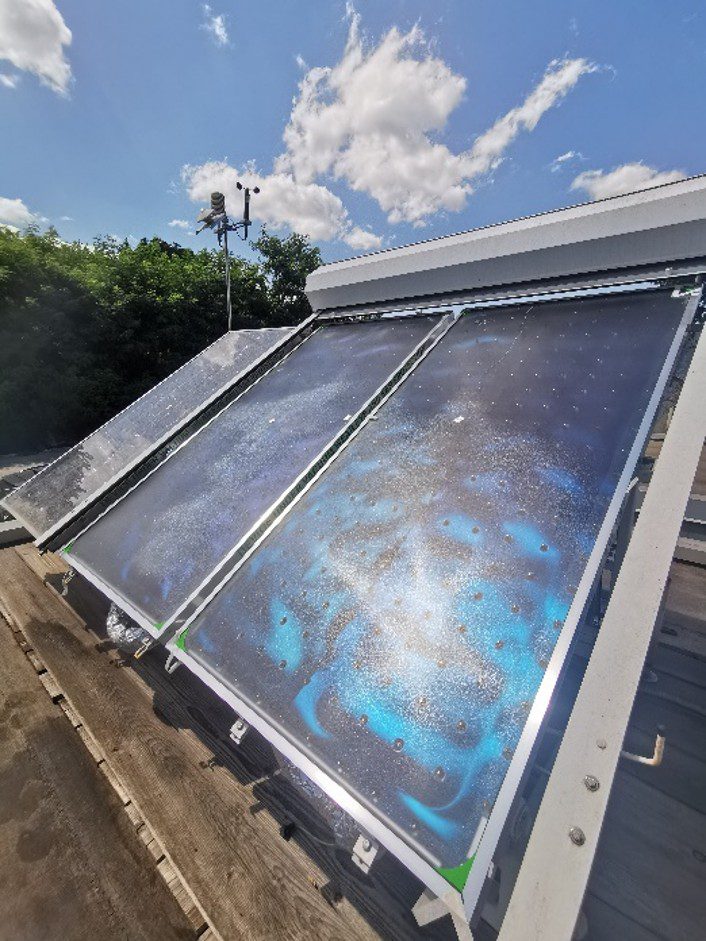
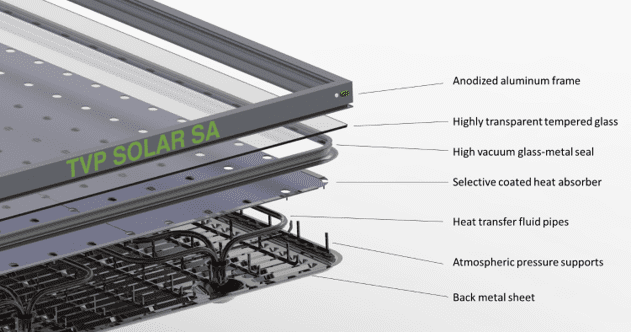
A significant focus of our research lies in solar thermal collectors, where we have cultivated extensive expertise through collaboration with TVP Solar, a leading company in the production of innovative high-efficiency solar thermal collectors, specifically High Vacuum Flat Plate Collectors.
EFESTO Group - Research material

This partnership has enabled us to access advanced facilities for testing the performance of these collectors. Our research activities include the development of comprehensive performance characterization procedures, mathematical modeling of performance parameters, and the execution of outdoor experimental measurement campaigns and simulations.

This integrated approach allows us to optimize both individual collectors and the installation of components, as well as to enhance the control of high-performance solar thermal fields.

Through our ongoing efforts, the EFESTO group aims to contribute to the advancement of solar thermal technology, promoting greater efficiency and effectiveness in the utilization of solar energy for sustainable applications.
Recent Publications and Conference Papers

TitleAuthorsYearConference nameSource title
Data-driven thermal characterization of a 1-D model for sensible stratified thermal energy storageAnacreonte A.V.; Capolupo F.; Russo R.; Vitobello R.; Musto M.202541st UIT - Naples, ItalyJournal of Physics: Conference Series
Comparison between MIX number and dimensionless exergy as performance indicators in a commercial stratified storage for future optimization of solar field operationsAnacreonte A.V.; Bianco N.; Vitobello R.; Russo R.; Musto M.2025-International Journal of Green Energy
Design and implementation of industrial hot pipeline prototypes with high vacuum multilayer insulation: Enhancing thermal performance and lifetimeCapolupo F.; D'Alessandro C.; De Maio D.; Di Giamberardino F.; Palmieri V.G.; Anacreonte A.V.; Russo R.; Musto M.2025-Applied Thermal Engineering
Design and thermal test of high-vacuum insulator for heat delivery pipesCapolupo F.; D’Alessandro C.; Strazzullo P.; Russo R.; Musto M.202440st UIT - Assisi, ItalyJournal of Physics: Conference Series
Energy comparison analysis between direct and indirect dry saturated steam generation, thermally powered by EFPCs’ solar fieldsLevrano A.; Anacreonte A.V.; Gaudino E.; Vitobello R.; Sparano S.; Russo R.; Musto M.202440st UIT - Assisi, ItalyJournal of Physics: Conference Series
Experimental data analysis and dimensionless exergy levels in a commercial stratified thermal storageAnacreonte A.V.; Musto M.; Bianco N.; Vitobello R.; Russo R.202440st UIT - Assisi, ItalyJournal of Physics: Conference Series
Formulation of an Efficiency Model Valid for High Vacuum Flat Plate CollectorsGaudino E.; Caldarelli A.; Russo R.; Musto M.2023-Energies
Evaluation of the absorber temperature frequency function valid for evacuated flat plate collectorsGaudino E.; Musto M.; Caldarelli A.; De Luca D.; Di Gennaro E.; Russo R.2022-Energy Reports

Solar Field Simulation: Modeling, Performance Analysis, and Optimization

Control activities in solar thermal fields are currently in the early stages, with initial efforts focused on regulating heat transfer fluid flow rates to maintain optimal thermal conditions. Medium-term objectives include dynamic management of hydraulic circuits (e.g., valve actuation) and integration with thermal energy storage systems to balance production and demand in real time.

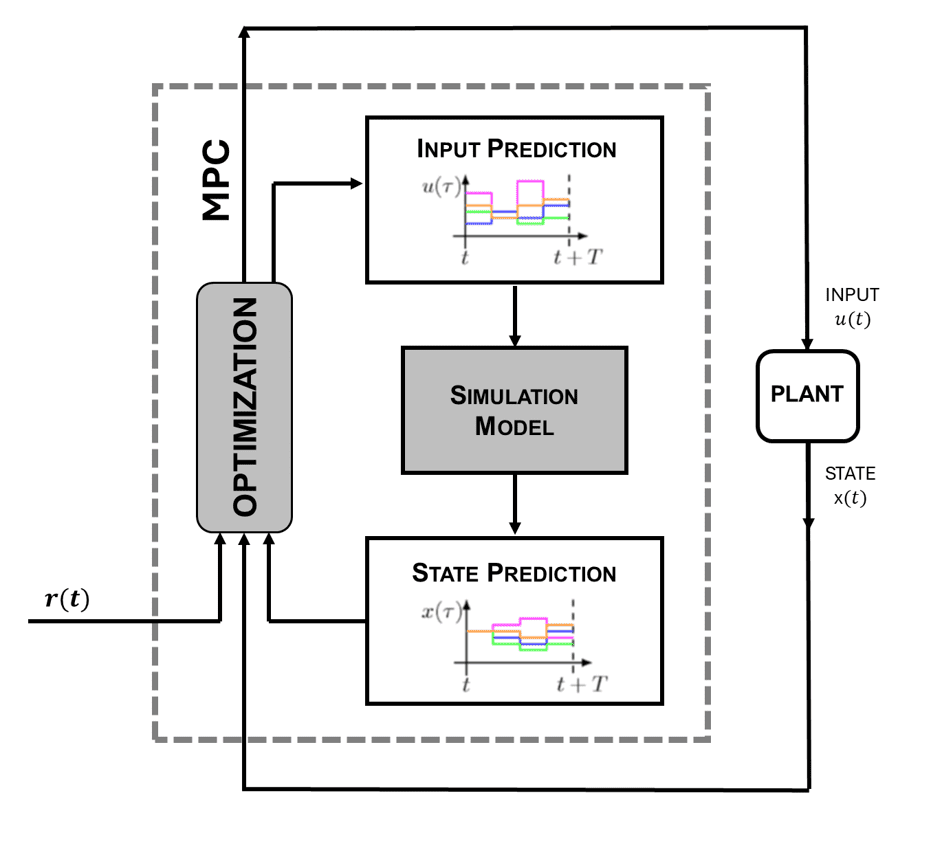
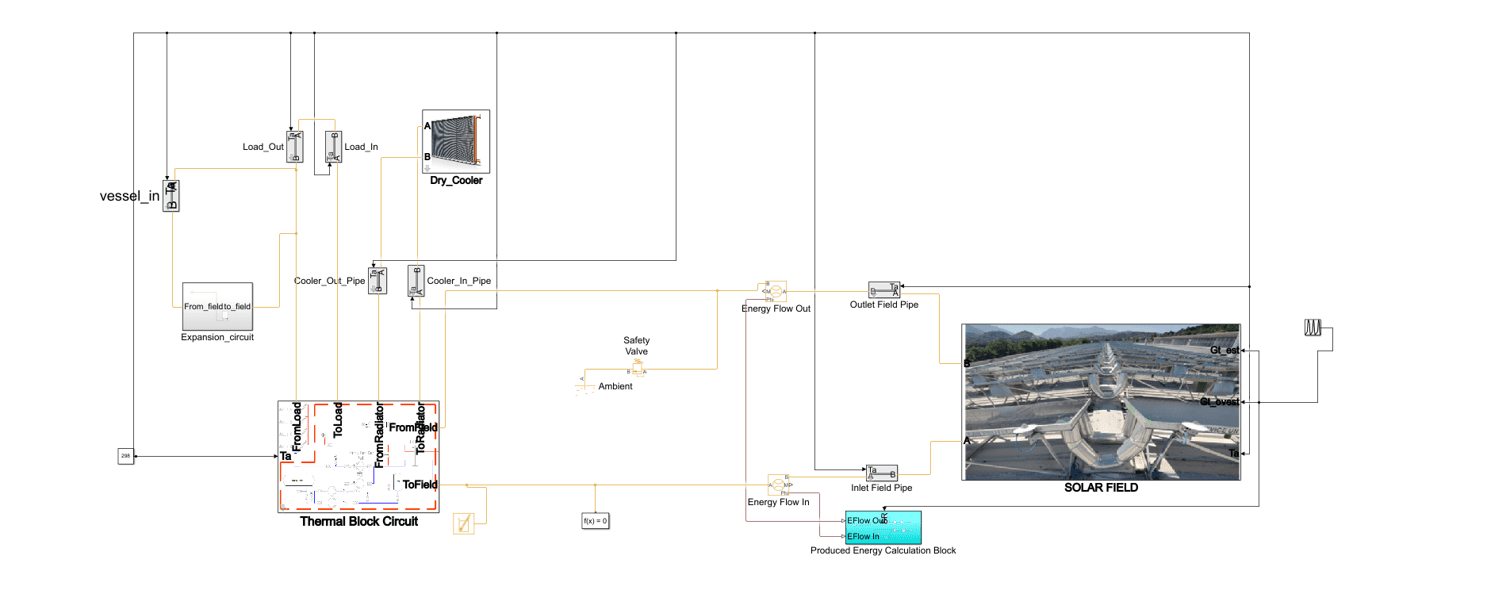
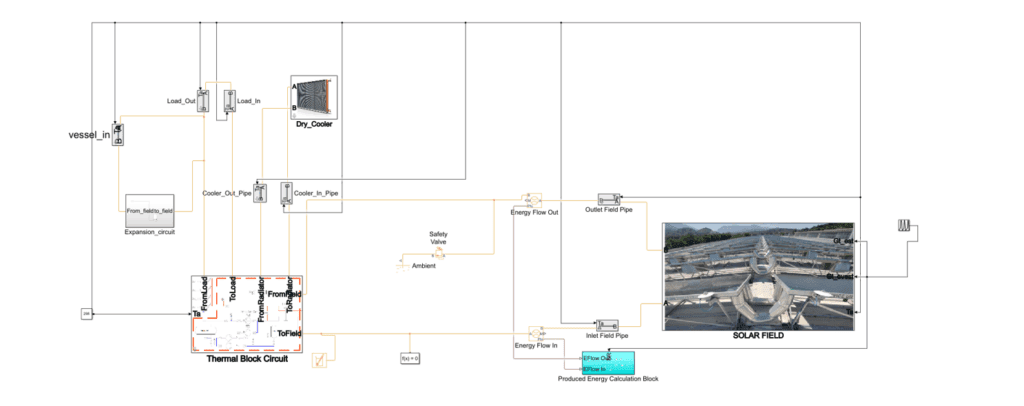
The control strategies under development include both conventional methods (PID) and advanced predictive techniques such as Model Predictive Control (MPC). In parallel, we are building digital twins of our solar fields to enable real-time simulation and virtual testing of control logics. These models draw on simulation outputs and experimental data from testbenches and real installations to support tuning and scenario evaluation.

Although integration with smart grids and external intelligent systems is not yet active, the control architecture is being designed for industrial-scale scalability. Current efforts are focused on creating a robust and flexible control framework capable of adapting to dynamic operational conditions and enhancing the overall efficiency of solar thermal systems.
EFESTO Group - Research material

Solar Field Simulation: Modeling, Performance Analysis, and Optimization

Numerical simulation of solar thermal fields is a key enabler for performance analysis, system optimization, and the validation of new collector models developed in collaboration with industrial partners (e.g., TVP Solar SA). Our research group adopts a multiscale, multiphysics approach, integrating various computational tools to address modeling needs at the component, subsystem, and plant level.

We employ MATLAB (including Simulink and Simscape) for system-level simulations, finite difference schemes for dynamic thermal modeling, and stochastic/data-driven approaches developed in Python. For component-specific thermo-fluid analysis—especially of advanced solar collectors—we use FEM simulations in COMSOL. Input data are derived from diverse sources: real plant configurations, laboratory-scale testbenches, industrial installations, and high-resolution meteorological datasets.

Simulation outputs are validated through experimental data collected from pilot systems and full-scale installations. These simulations deliver key performance indicators, such as thermal efficiency and heat loss profiles, and support seasonal performance optimization. Parallel to this, we are developing AI-based predictive and adaptive models to lay the groundwork for smart, responsive solar field operation in future scenarios.
EFESTO Group - Research material

High-Vacuum Flat Plate collectors: Performance parameters modelling, Outdoor Testing

High Vacuum Flat Plate Collectors (HVFPCs) are advanced flat plate thermal collectors designed to generate thermal energy for medium-temperature applications, typically within the range of 150-200 °C. These collectors maintain an internal pressure below 10^(-4) mbar, leveraging high vacuum insulation technology to achieve remarkable efficiency in the solar thermal sector.
EFESTO Group - Research material
The unique characteristics of HVFPCs enable them to exhibit a reduced heat loss coefficient compared to conventional thermal collectors, resulting in significant improvements in efficiency and thermal performance for industrial applications. The flat structure of HVFPCs combines a high fill factor with ease of integration into building designs, minimizing heat losses and expanding the range of applications suitable for evacuated collectors.

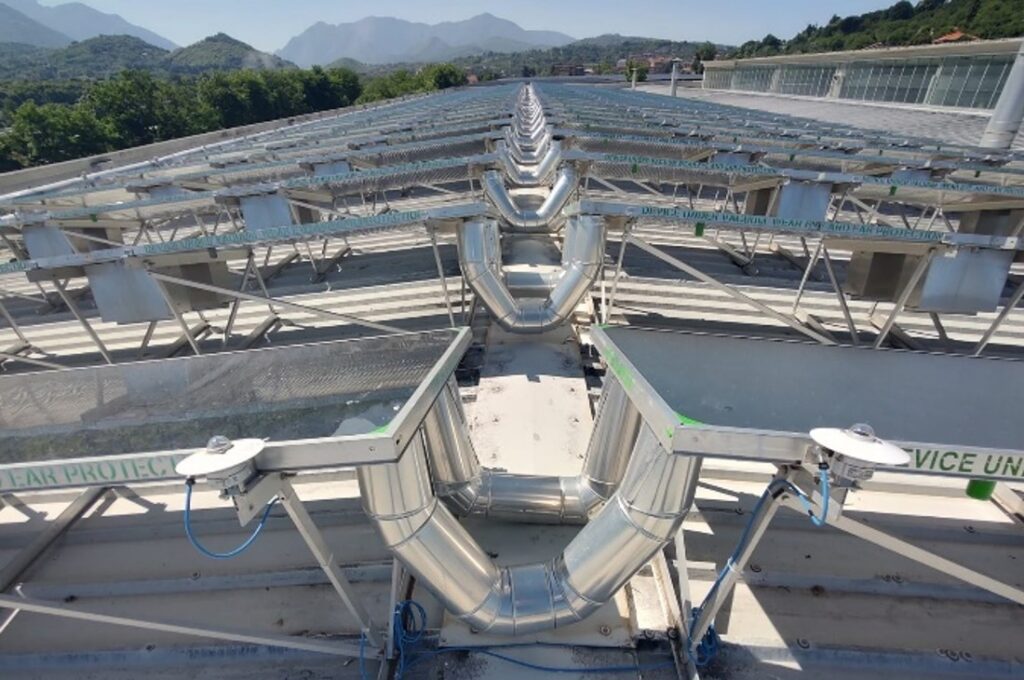
Given the innovative features of these collectors, our research has focused on the mathematical modeling of performance parameters that accurately describe and account for their unique characteristics. The validation of these models was facilitated by dedicated testing facilities provided by TVP Solar, where we characterized the behavior of HVFPCs under various operational conditions, including seasonal variations, irradiation levels, orientation, different heat transfer fluids, and mass flow rate adjustments. These facilities encompass both a test bench for individual panels and a solar field setup comprising 25 parallel strings, each containing seven panels.

The models and characterization procedures developed through this collaborative research are invaluable, as they enable us to extensively characterize these advanced collectors in-house, fostering ongoing advancements in solar thermal technology.
EFESTO Group - Research material